
How Flint & Flowers Came to Be
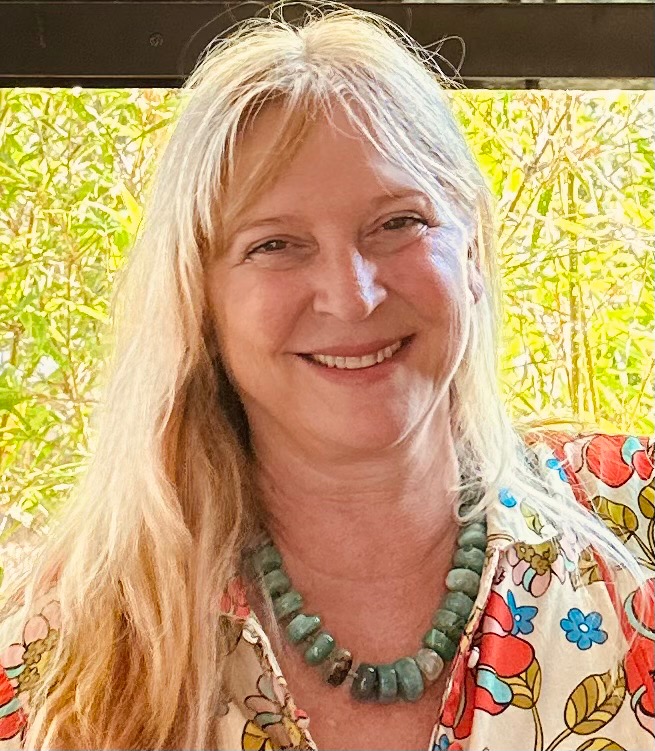

I went to Luckenbach one afternoon to hear my cousin’s band play. At some point he asked me whether I had any need for five acres near Pedernales Falls State Park. I told him, quite definitely, no. By the time I finished my Shiner Bock, I had the vision for Flint & Flowers. What appeared in my mind wasn’t really a campground. It was a way to share something I had been collecting for most of my life. Trained as an anthropologist, I have always traveled that way – not simply interested in what there is to see, but endlessly curious about how people live. What they eat. What they grow. What they make with their hands. How they gather. And especially, how they welcome one another. Somewhere along the way, I began collecting small acts of hospitality. Not intentionally. I simply remembered them. Flowers floating in bowls of water at every doorstep. Nothing elaborate. Just something beautiful placed there because someone just might arrive.
A tiny statue of Ganesha pressed unexpectedly into my hand by a cleaning lady. I didn’t need to understand words being spoken to understand the gesture. A white bath towel twisted and folded into a perfectly recognizable swan waiting for me in a room. Completely unnecessary. A little ridiculous. Absolutely delightful. Someone had spent an extra minute simply to make a stranger smile. Once, climbing onto a crowded bus, a woman smiled at me and then picked up the very-much-alive chicken occupying the seat beside her so that I could sit down. There was no ceremony to it. No shared language required. She was just proud to share her bench with me.
The chicken continued its journey in her lap. And then, coffee. More than once, on completely different sides of the world, I learned that traveling through a place famous for growing coffee does not necessarily mean you can actually buy a cup of coffee. I would arrive somewhere in the afternoon tired and desperately wanting coffee. The owner told me they didn’t sell coffee only water.
He must have seen my face fall. Instead of sending me away, he motioned for me to follow him around the back of his shop. Several workers were finishing their lunch. He said something to them in a language I couldn’t understand. Someone pulled up a broken chair. Someone found a cup. And a few minutes later I was sitting among them smiling nodding and drinking instant Nescafé. It was wonderful. No café. No menu. No carefully set table. Nothing had been prepared for me at all. They simply saw someone who badly wanted a cup of coffee and figured out how to give her one. Some version of that has happened to me more than once in very different parts of the world. Perhaps that’s why, to this day, I have an unreasonable affection for Nescafé instant granules; it tastes like being welcomed somewhere I wasn’t ever expected.
Those are the things that have stayed with me. Not the thread counts or the star ratings. Not whether everything matched or whether someone had anticipated every possible desire. I remembered how people made me feel. And gradually I understood that hospitality has very little to do with extravagance. It is attention. It is noticing. It is making room for another person – sometimes quite literally. It can be flowers floating in water. A tiny object pressed into a stranger’s palm. A towel made into a swan. A chicken cheerfully displaced from its seat. A broken chair and a cup of instant coffee behind a shop. Different places. Different languages. Different customs. Yet somehow they were all saying the same thing:
I see you. I'm glad you're here. There is a place for you.
And sitting there in Luckenbach, with five acres I had been quite certain I didn’t need suddenly available near one of the most beautiful places in the Texas Hill Country, I realized I knew exactly what I wanted to do with them. I wanted to create a place where I could practice what all those years of traveling had taught me about welcoming people.
But I wanted to express it in the language of my own home. The Texas Hill Country I love isn’t manicured or manufactured. It’s limestone and live oaks. Wildflowers growing wherever they please. Cedar and native grasses. Deer appearing at dusk. Cicadas and birdsong. Hot afternoons giving way to cool evenings beneath enormous skies. It’s sitting outside long after you intended to go in. It's learning that Pedernales is Spanish for Flint. It’s noticing what’s blooming. It’s looking up and realizing how many stars you can see. I didn’t want to build something that competed with that landscape. I wanted to invite people into it. To wake with the birds. Sit outside with their coffee. Walk among whatever happened to be blooming. Watch deer wander through. And perhaps, for a few days, experience the Hill Country the way I know and love it – not polished into something else, but beautiful precisely because so much of it has been left alone.
That became Flint & Flowers. A place shaped by years of wandering through other people’s worlds and noticing the countless ways they made room for me, then coming home and asking: How do I make room for you here? The answer was five acres I was absolutely certain I didn’t need, a Shiner Bock in Luckenbach, and a lifetime of small kindnesses I hadn’t realized I’d been collecting. I had been collecting lessons in welcome all over the world without realizing it, and suddenly I found somewhere to put them.

Comments